

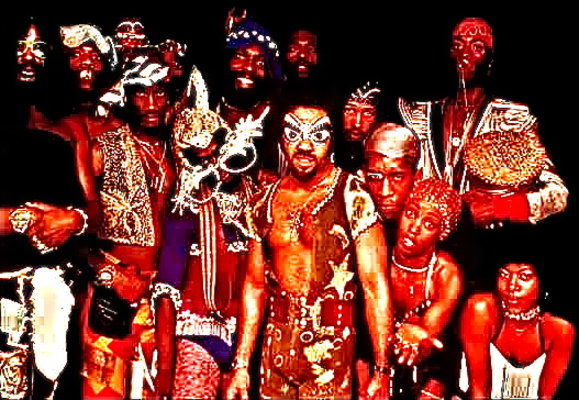
 In its heyday in the late 60’s and all the way through to the 70’s, simply put for the most part, funk music was a very black experience. The bands were black, the fans were black, and the movement was black. While some bands featured white members occasionally, white people didn’t flock to the shows because most shows like Parliament, Zapp, Cameo, Ohio Players drew a largely black audience and in the volatile nature of the 70’s, it was simply a different vibe and funk music was a fraternity of sorts.
Meanwhile in the midst of all of it were bands such as Sly and The Family Stone which defied stereotypes that funk was all black. While at the time, even to Sly Stone‘s admission in Finding the Funk, it was a marketing gimmick to mix both sexes and all colors. And they were very funky. Some may argue that while it was marketing, it also started a trend that sent a very different message and that message was that white people can be very funky too. Then add in bands along the lines of Average White Band (AWB) and Tower of Power and the trend becomes undeniable.
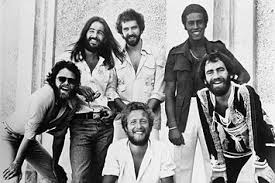 When AWB came onto the scene, they had even made a statement that their name came from the fact that even an “average white band” could be funky. James Brown took particular offense to that statement and had even temporarily named his band the Above Average Black Band including the release of the single entitled Picking Up The Pieces One By One to riff on AWB‘s major hit Pick Up The Pieces.
When Prince came onto the mainstream scene in the 80’s utilizing the same formula as Sly Stone, the timing couldn’t have been more groundbreaking. Racial tensions had eased and here was yet another very funky band who were predominantly white (Wendy, Lisa, Bobby Z., Dr. Fink, and a sex crazed front man who at the time claimed to have a white mother). Funk was getting whiter.
This opened the doors for many white funk bands to slowly begin coming more into the mainstream in various forms including Tower of Power, Galactic, and others. And with the breakthrough of this noticeable change, the live shows for all funk acts across the board began to drift to a majority white audience to the point where very few funk acts had a majority black audience anymore.
To make things even stranger is that most funk bands nowadays are primarily white. If you were to take a random poll of some of the more renowned funk bands on the scene today, you would find that the skew is typically 80% white to 20% black and the audience they draw is even more skewed white.
 Bands such as Orgone, Monophonics, The New Mastersounds, Brownout, Galactic, Lettuce are some of the most recognizable funk bands out in the mix and their members and audience all skew white. While this isn’t a bad thing by any means, the real question is, what happened?
Even old school bands who still perform such as Earth, Wind and Fire, Ohio Players, Parliament, and Prince tend to draw a majority of a white audience. Does it speak to changes in music tastes among the races? Economics? Dynamic cultural shifts?
All that being said, it’s a truly unusual phenomenon that goes unexplained and in most cases ignored. Surely the black audiences have noticed. Did we simply give funk music to the white people and settle on being okay with claiming rap and R&B as “black music”? And how long will that last as artists like Adele, Joss Stone, Robin Thicke, Mayer Hawthorne continue to bleed into the mix?
Another view is that maybe, just maybe,with the exception of old school funk, the black population simply isn’t interested in funk music anymore or that they don’t even know that new funk bands even exist. The incredible lack of marketing for this genre of music is deplorable at best and to be “in the know”, you either have to be very active online and willing to search it out, or active in the local funk music scene.
Many believe that this is the true root of the problem because according to even the government census, only 56.9% of black households have internet in their homes compared to roughly 77% of white homes and 82% in Asian households. And you certainly aren’t hearing funk music on the airwaves. You’re getting it live or online only.
The obvious point is that there doesn’t need to be any racial lines in music, but society can’t help to feel otherwise for whatever that reason may be. There are definitely economic boundaries that very simply are keeping people from hearing certain types of music. And while music crosses all divides, you can’t help to notice that it’s blending in a very unusual fashion.
What’s your take?

Funk era Funk music is created by the people for the people during a revolutionary of civil unrest from the late 50’s through today . Black people adopted it as a way of music genre to ride to hide the pains and the disgusting challenges they faced Now with that being said we could’ve called funk aka Foul… But no we allowed them the white music industry and white media just took that funk genre and tried to crush it out of their memory the music tours publication everything they could find to get rid of it totally. But you know, the White bands well, they said, we will carry the that funk bus riding the pains on the backs of the black fame funky genre bands . And like everything in America the were successful started by one race becomes another gross dehumanizing case. Out like a new invention but it get re-scripted added a new way for hiding the shame of fame on the funk back of a black man who invented the funk game in the first place. We just make a Populous in the genre of funk music no one can ever take away the history that already been told! It’s just Music!!!!!……………………………………………..
I guess in 2050 kids will have to be taught in school that rap was started in the Bronx by kids who didn’t have instruments or music classes because the schools had been defunded. Go to a jazz concert now and there is a good possibility that the audience will be mostly White and Asian. Black musicians such as Chuck Berry, Ike Turner and Little Richard helped create rock n roll, Jimi Hendrix is the undisputed king of the electric guitar, but rock is considered White people’s music. Even 70’s and 80’s soul and funk acts that are still performing get much more love in Asia and Europe than they do in the States. Go figure. I guess in our continual quest to find the newest and hippest we are sometimes guilty of overlooking the treasures that are right in front of us.
It paints a different picture in sounds a lot different its makes sense . With all that surrounds years gone pass music is still music . Whether good or bad its the soul that help create the sound with are drawn to emotionally audibly spiritually. By earlier than 2020 music genre will have adopted and another genre and music of the 50’s through to the 70’s & 80′. Well that is the most dominate era of music with regards to soul , pop rock and FUNK. The only genre that have a class distinction is Jazz. By 2025 that too will be under the Ole Grand father law as history class protected. Govern by the USA FED .. So have heard seen and witness the most monumental era of music if we have lived pass 50’s 60’s 70’s 80’s/ It will never ever go back unless God rewinds this mad drama that one person adopted and tried to make a independence day with it, LOll. With Europe and Asia completely taking our music and classic funk or any other genre that is funk influence and made it the way of life today. We have not been able to take it back to USA and Hall Mark our own genre . Why USA FED its not going to happen. And they way whites use it to get people of different races to hear them and learn them and eventually like them as funk musicians and rightly so. But never like that in UK Beatles AWB , and many others who still tour there countries when they can and still popular. Well , we need to put our seat belts on tighten up our pockets we about to be rock by a change they can not even put in there history books, its no rap, punk, r&b, classic rock , jazz, its called The People Music: Own and TM by the people for the people sold to people. loll We need to keep focus and not let history slip through the cracks because its made from one race or another. Its music for the people. Let the funk live on …..
Glad I found this site. I’ve become a subscriber. Now my hypothesis:
First jazz was black. Now it’s white.
Then blues was black. Now it’s white.
Then rock ‘n’ roll was black. Now it’s white.
Then Motown was black, but its audience became mixed.
Then funk was black. Now it’s white.
Then r&b was black. Now it’s mixed.
Then disco was black. Now we remember it as white.
Then acid and house were black. Now it’s white.
Then hip-hop was black. Now it’s reigning Grammy winner is white.
See a trend here?
For over 100 years, black music was always inventing something new, eating it up, and then creating a new musical stew just as whites were discovering the old one and making it their own.
What’s really interesting is that, given the cycle I laid out above, black music still hasn’t birthed the successor to hip-hop yet. For about 100 years, each black generation seemed to synthesize and reinvent the music that came before. For the most part, the West’s most popular music refuses to venture beyond the same rhythmic, harmonic, and thematic cliches. Why?
Look at my timeline again. Our other musical inventions were born amid widespread strife and struggle. Now that we have a black president, have we overcome so much that we can’t work up the deep-down, soul-felt angst and anger it takes to make people move? Have youths’ current “instruments” — samples and software — removed them so far from musicmaking that they can no longer channel music’s grit and groove?
Black or white, purple or green, we all keep listening for the next big thing. Sadly, on the radio, the crap always rises to the top. So we turn to the promise of the web. Surely the size and nature of the Internet mean that we’re undoubtedly surrounded by many versions of The Next Big Thing, right? But the size and nature of the Internet also mean that The Next Big Thing is crazy hard to find.
The upshot is the financial incentives for devoting a life to making music shrink smaller and smaller every day. Meaning that ironically, in an era when music has never been more pervasive, it’s harder and harder to find the next Satchmo or Howlin’ Wolf, or “Rocket 88,” or Supremes or James Brown or Levi Stubbs or Van McCoy or Frankie Knuckles or “The Message.”
While the author wonders about whitening of funk, I say that isn’t a conundrum. It could easily have been foreseen. I submit that the conundrum is why hasn’t black music already created The Next Big Thing.
Don’t fake the funk or you nose got to grow.
I’ve never read comments based on so much unfounded bitterness in my life! Get a grip — music evolves and changes, and yes, the funk movement back in the day was created by some very talented black folks that took some risks and shined. As a white guy, am I not allowed be a part of it? Your comments make it sound like I’m not allowed in the club… I embraced that music and oftentimes had to listen to it on the QT because it was deemed unacceptable by my peers. Stating that xxxx artist created something that was somehow stolen by Whitey is as ridiculous as claiming that a Caucasian guy once invented an instrument (guitar, drums, keys, bass, etc., pick one) that was pilfered by a black guy with no respect to the original inventor as he created his own sound… Now excuse me while I listen to some Tom Browne kickin’ Thighs High…
Vanilla, i’d agree with you wholeheartedly if there was ever a time in American history when the PROFITS of an invention or product created by a white person became totally usurped by the Black community. That has NEVER happened in this country. It’s not just that white folks eventually catch on to a musical style originated in the Black community. It’s that the entire industry surrounding that style shifts to the point where the point of view of the Black artist is NO LONGER WELCOME, and we can no longer PROFIT from the music that was originally created in AND representative of our culture. Think about this as your shake your hips to “Thigh’s High”: Will we EVER see a day when ALL rock musicians, country musicians, or classical musicians are Black? and Why do think that is..? Hmmm???
Will we EVER see a day when ALL rock musicians, country musicians, or classical musicians are Black?
NO BECAUSE THEY HAVE NEVER BEEN 100% WHITE EITHER
Get outta here with all your hate….smh its sad that the white guy is the most tolerant here
Brieze is right, I didn’t catch any “hate” in that comment either.
This is a very white response. Please de-center yourself. Why do white people feel like they need access to everyone else’s culture yet want to keep everyone at arms length…
If anything, you should be thankful black people created these outlets for you to enjoy, even if it was at their own detriment.
Music education is schools stopped, and so did many Black kids’s introduction to music.
In my way of thinking funk never went white it just died out. Prince, Michael Jackson and Rap plus the industry forcing the band’s to get smaller killed funk. Those modern white funk groups that were named I never heard of them or a song of theirs. Maybe they are avoiding black radio, black advertisment and black venues that’s their fault then. I’ve talked with enough “outsiders” when it comes to funk music to know their comfort zone is Eddie Hazel, Mike Hampton, Garry Shider, George Clinton, Parliament Funkadelic and Bootsy. Soon as you bring up Cameo, Slave, Commodores etc their funk knowledge dries up fast. I’m also surprised that another genre hasn’t supplanted Rap, I guess black folk have gotten fat and happy in this country.
i am a White, 63 years old and i have been loving FUNK music since i started hearing James Brown. Black music and especially black Funk if u wann name it as such, allways was my favorite because their musicians allways could express their honest feelings, the rhythm and vibes it is supposed to tell. Sadly it disapeared for what ever reason. Still hearing it and promoting it in Beach Clubs on the Balearic islands and one day there will be a huge REVIVAL!
Being one of James Brown’s last drummers. I really appreciate this article.
Music doesn’t belong to anyone. It’s magic that we have the privilege of manipulating.
And as magic goes, different ingredients and recipes and different wielders create different kinds of magic.
It just so happens that the emotional content expressed from dark skinned people created a gigantic tree from which modern music grew from.
Every limb, branch, leaf and fruit is preceeded by the trunk and more importantly, “the roots” of music magic conjured by dark skinned peoples.
That being said, I would LOVE to see more dark skinned people sharing their spells and potions on the internet, schools, trades shows and elevate themselves just as other have done and are doing.
Do not be fooled into thinking that there aren’t those out there that are actively readacting and even erasing our contributions to the magic.
Wednesday, August 14th, 2024.
This was a great read I stumbled across. Help me keep the FUNK alive. Go to my website and buy some FUNK merch and, most important, WEAR IT AMONGST YOUR FAMILY AND FUNK MUSIC LOVING FRIENDS! Represent!
Check out my credentials and read my bio on the website and also see pics of some FUNK pioneers who love their “FDE” (funkdontexpire}. Just click on “Show more”.
Click on any shirt and follow the specs to ensure your shirt fits the best it can. We have all sizes from Small to 4X and they’re all priced accordingly and within reason. And lastly, the slogan below is on the back of every shirt, along with the website address for all interested parties:
EVEN SCIENTISTS DON’T HAVE THE INSTRUMENTS TO MEASURE THE DEPTHS OF THE HUMAN SOUL BUT MUSICIANS DO… Now, ain’t that the truth…
funkdontexpire.com – tell all your friends!
Everything in life evolves. Funk is very much alive. Listen to Snarky Puppy, Lettuce, Dumpstaphunk, Phat Phunktion, and others.